Thursday, November 5, 2015

Considering Visual Elements

As I continue to work on developing Project 3, I'm now beginning to look at the potential visual components of my work.  I know that on some online versions of newspapers, opinion pieces are accompanied by an image, or enlarged quote.  However, because my issue is so local, I'm looking at just how the Arizona Daily Star formats opinion articles.  The Star, even in its online format, provides only text in its opinion articles.  You can view some examples here and here to get an idea of what I mean.  Because of this, I'm rather limited in terms of visual elements.

Ossanna, Lia. "Tucson.com logo." 11/5/15 via http://tucson.com/

Questions (taken from Writing Public Lives)

  1. What color choices best reflect the visual-rhetorical tone of my project?
    • Since this is going to be for a newspaper, I will stick to just black and white coloring.  Unfortunately I can't include images, my project will basically be a headline and a bunch of text.
  2. How might I vary the fonts used in my project for emphasis, such as the title and body of my project?
    • I'm not really sure if I really have the power to change the fonts or have multiple fonts in my project, because since newspapers are uniform, the fonts are probably all going to be the same. That being said, there will be a difference in the size of the headline, so I should make the headline itself catchy and interesting.
  3. Are the fonts appropriate to the visual-rhetoric tone of my project?
    • Since I'm probably going to end up using just one font, I'm going to pick a standard font that is professional to give the right tone; probably something like Times New Roman.
  4. Do your eyes move easily from section to section in the order that you intended?
    • Print articles are broken up into small columns, which helps the readers scan the page more easily.  I should replicate this in my draft to make sure the effects are what I want. 
  5. Could large blocks of text be broken up more effectively using text boxes, lines, headings or images?
    • Newspaper articles also use short paragraphs, so readers feel like they're reading quicker, and progressing through the article.  The best way I can break up large amounts of text is by writing short paragraphs and using line breaks.
  6. Is the visual-rhetorical tone of your project consistent?
    • This project will be only text, written in a very standard way, so it will be extremely consistent with the tone and the medium it will be published in.

REFLECTION

After looking at Olivia and Bailey's posts, it made me wish that I could have more visual elements for my project as well.  Having images really adds a whole new layer, and gives the project more dimension.  However, because of the platform that I've chosen (Arizona Daily Star), it would make sense for me to add images and other visual elements because the Star provides only text for their opinion articles.  None of them, either online or in print, have any accompanying images.  So to stay true to my platform, I shouldn't spend time focusing on visual elements.  I can't change my platform either, because my topic is so narrow that this is the only one that really makes sense.  But overall it's okay, because I'll just focus on the text and making sure that's strong and speaks for itself.

Project 3 Outline

I've explored a lot about my issue and genre, so now I'm completing an outline to help me write my first draft for Project 3.  You can view my outline here.

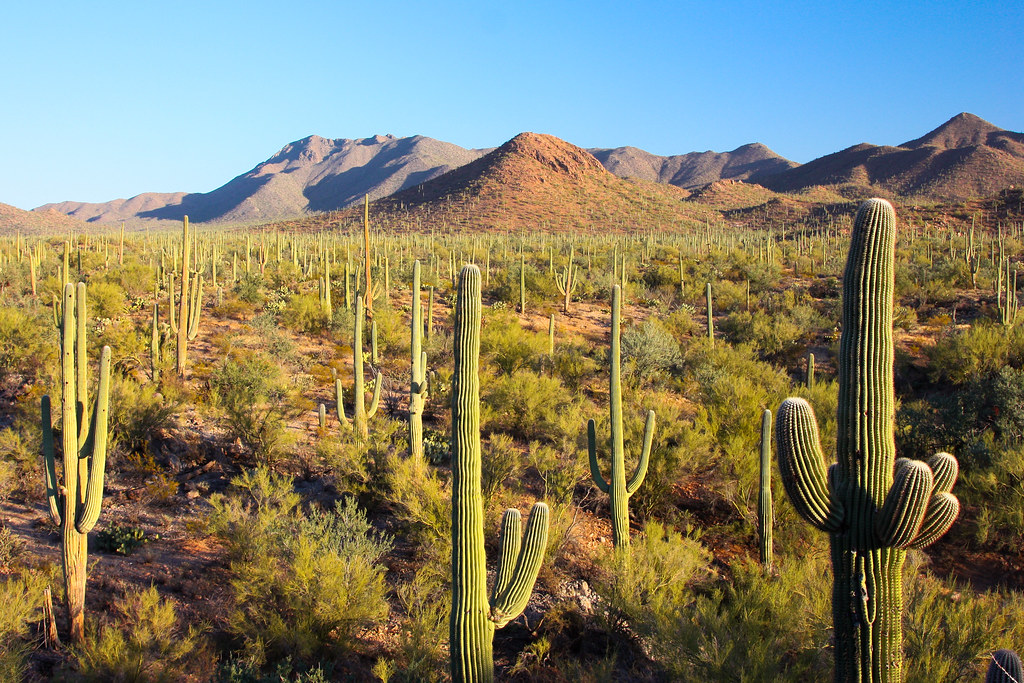
Parks, Joe. "Saguaro National Park." 11/3/12 via Flickr.
Attribution-ShareAlike 2.0 Generic License.

Wednesday, November 4, 2015

Analyzing My Genre

To help decide how to evaluate my project, I'm going to provide a more extensive background on the genre that I've picked, which is op-ed.  First off, here are some examples of my genre:

Example 1 "Is Eastern Europe Really More Racist Than the West?" (NY Times)
Example 2 "Thinks religion makes society less violent?  Think again." (LA Times)
Example 3 "The GOP's ridiculous debate demands should be rejected" (Washington Post)
Example 4 "Smarter copyright laws could stop the next VW scandal" (Wired)
Example 5 "Why Asian Americans Don't Vote Republican" (Newsweek)

Ossanna, Lia. "Screenshot of NY Times opinion page." 11/4/15 via
http://www.nytimes.com/pages/opinion/index.html

Social Context

  • This genre is typically set in newspapers and magazines.  The examples I have come from LA Times, NY Times, Washington Post, Wired, and Newsweek.  Op-ed sections are more common in newspapers.
  • Op-eds can cover just about any topic.  Usually opinion pieces stem from an event that creates controversy or has multiple opinions and views to it.  These events are generally popular in the news, and generate passionate dialogue, some of which is expressed through op-eds.
  • Op-eds are written by people who are not affiliated with the magazine or newspaper publishing them.  They are guest writers, and usually knowledgeable about the topic.  The examples I have come from prestigious and well-known newspapers and magazines, so the people writing the guests opinions are generally professors at distinguished universities.
  • This genre is used to promote a certain viewpoint about an issue.  All of the examples I have are a reaction to an event or series of events.  The Newsweek op-ed attempts to describe why a trend in voting is occurring; some op-eds give opinions on why something is happening, while others debate the pros or cons of a viewpoint, idea, or policy.  These op-eds are used to reach a wide audience and influence the readers of that newspaper/magazine.

Rhetorical Patterns
  • Op-eds generally must give some background on the subject, because the readers may not be experts, whereas the authors are more likely to have a wider knowledge of the topic.  This can be done by including direct quotes about the issue from other sources.  Since op-eds are relatively short, they must be deliberate and to the point; everything in the article must clearly have a purpose and serve to persuade the audience.  Some op-ed pieces are focused more on promoting their own ideas than refuting opposing ones, so thus leave out details about conflicting views or explanations.
  • The types of rhetorical strategies used depends on the particular op-ed itself.  However, I did notice in my examples that pathos and logos seemed to be more prominent than ethos.  In the Newsweek op-ed, the author uses graphs and statistics to show how Asian Americans are becoming increasingly Democratic, which is a logos appeal.  The New York Times article opens with a powerful image of innocent refugees who are blocked from seeking shelter in Europe, an appeal to pathos.
  • Op-eds generally have striking titles to grab the attention of readers.  The LA Times headline, "Think religion makes society less violent?  Think again" at once presents a very strong and controversial opinion.  Personally, this intrigued me, which is why I used it as an example.  The Washington Post headline is another example of inflammatory and charged language: "The GOP's ridiculous debate demands should be rejected."  The titles have to convey the message of the opinion in just one line.  Op-eds generally then begin with an opening powerful image, or some more background information on the issue.  After a distilled explanation is given, the author moves into giving his/her opinions.  The conclusion then leaves the reader thinking about the opinion given, such as with the NY Times article that stresses "demonizing Eastern Europeans" is not the solution.
  • Like all good writing, op-eds must have varying sentence structures and types to keep the article interesting.  Some op-eds do use questions more than other genres, because questions engage the reader by asking them directly to think about certain things.  This is the main distinguishing trait in terms of sentence structure.
  • Op-eds are written with a slightly informal tone.  The authors talk more directly to the reader.  The passionate tone of op-eds make them naturally more riveting and sometimes inflammatory.

Rhetorical Patterns and Social Context
  • The genre includes people who read that newspaper or magazine, and who is interested in the topics those op-ed pieces explore.  This genre excludes people who don't read newspapers/magazines, or people who are offended or disagree with the opinion given.
  • This genre encourages both the reader and writer to be extremely engaged in the text and the issue explored.  Writers want their readers to rethink an issue, or reflect upon a viewpoint or idea.  Writers strive not just to enlighten their readers and bring about awareness, but also to impose upon them a clear opinion.
  • The values and beliefs presented in opinion pieces vary drastically depending on the piece and the author.  In general though, it is assumed that the reader is engaged and interested in the topic, and probably has beliefs similar to those presented in the article.  I read editorial pieces because I am interested in the topic, and usually because I agree with the position and want to see how by reading this article, I can strengthen my own argument about that topic.
  • Editorials are concerned with controversial content.  What that content is specifically varies greatly.  Usually editorials revolve around current news and issues, due to where they are published.  Editorials are concerned with issues that already have somewhat of an established audience with different viewpoints.

REFLECTION

I read Olivia and Joki's blog posts.  Joki is doing a text-based argument, similar to me, but Olivia had the creative idea of doing a cooking video.  As I saw when many people shared in class today, lots of us want to take the chance to move away from making our arguments through text, and instead find another media.  It's going to be really cool, the kind of diversity that this project produces.  I however, am just sticking with text, because I enjoy writing and find it to be one of my strengths.  Even though it would be fun to try and make a video or something, I think I would have no idea where to start or how to create what I wanted to, and it would turn into way too much work.

Thursday, October 29, 2015

Considering Types

To narrow down what my public argument will be like, I'm considering which type of public argument type will be best for me to accomplish the purpose of my argument.

stillwellmike. "Saguaro National Park, Tucson, AZ." 3/11/12 via Flickr.
Attribution-ShareAlike 2.0 Generic License.

In looking at the different types of arguments, I'm seeing that a refutation argument might be most useful.  I want to prove that the current Tucson drought plan is not comprehensive enough, and doesn't thoroughly consider the long term effects of drought.  In doing this, I would analyze the drought plan and point out the weaknesses.  Like the exercise we did in class (although we didn't get to the refutation part), I would point out the ineffective points of the current proposal that exists.

Another possibility I'm considering is a proposal argument.  Because I want the drought plan to be changed, I could go about that by proposing my own ideas of what would be effective instead.  However, I don't think that I'm experienced and knowledgeable enough to make a plan that was as comprehensive as it needs to be, since I don't know a lot about water law and policy yet (I haven't yet taken those classes).

A causal argument or a proposal argument don't seem like they would be a very helpful way for me to present and organize my argument.  The cause of why I think the current drought plan is unsuitable doesn't really matter; what matters is that it needs to be fixed.  And finding the pros and cons also doesn't really make sense either.  Lastly, an evaluative argument is the opposite of what I want to do, because I don't want to praise and support the plan, I want to change it.  Of course, that doesn't mean I want to attack the current plan totally, and I understand that even the fundamental fact we have a drought plan is important and not something that should be taken for granted.  The general idea of the plan is good.  The only problem is, it doesn't go in depth enough.  So because of this, a refutation argument would probably be most suitable for my argument.


REFLECTION

Both Austin and Chris are considering refutation arguments like me.  I think that refutation arguments might be common for this assignment, because it's easy to find things that we're not happy about to make a strong argument against.  Personally, I'm considering to lean towards refutation, but I'm wondering if I could do a mix of a refutation and a proposal.  Because although I am not experienced enough to give highly detailed advice, I do have some suggestions, and I want to be able to propose some solutions instead of just being critical.  Because I've actually talked with the mayor, and I know that they are trying to make water conservation a priority, but it might be hard to take drastic action.  I also want to acknowledge that Tucson does have the right idea, and so I don't want to be totally harsh and attacking the city council.

My Rhetorical Action Plan

I'm continuing to developing my understanding of my rhetorical situation for the public argument I will be making regarding Tucson's drought preparedness.  In doing this, I will examine my audience, the genre of my argument, and how to handle possible reactions to my argument.

Howcheng. "Catalinas and Tuscon AZ." 4/24/06 via Wikimedia Commons.
Public Domain License.

AUDIENCE

My audience is the Tucson city council.  From what I can tell reading their current drought preparedness plan, they seem to be informed somewhat about the issue, but not in deeply scientific terms, so it's important for them to gain at least somewhat of that knowledge.  As I mentioned before in my "Audience and Genre" post, local political leaders will value many things that do not have much to do with environmental issues, such as managing the local economy and preparing the city budget.

However, they still should value the water resources Tucson has, because water is a huge part of everyday life, and with a limited supply we all would be forced to function much differently.  Overall, the city council must effectively run, take care of, and improve the city, so anything that affects the city's well being becomes an interest of the city council.  However, as I discussed earlier, their priorities might not favor water issues as much as other problems.

 Because the city council must manage the city's well being, anything they will take interest in my argument.  Depending on how persuasive I am, the city council could take action and revise their plan.  In being persuasive, one of the best techniques might be to present statistics about Tucson's water consumption and reliance on the Colorado River through Central Arizona Project, and then respectively statistics about how quickly the Colorado River is shrinking.

It also might be effective to point out exactly how long the water that Tucson has stored will last, because I think it's misleading and actually will support Tucson for a very short amount of time given our current water consumption habits.  In the way of visual elements, perhaps pictures that highlight the shrinkage of Lake Mead, or show how CA is affected by the drought could be helpful.


GENRE

I'm sticking with the genres that I outlined in my "Audience and Genre" post, which include either a letter to city council, or an editorial for the newspaper.

For the editorial, I would aim to have it published in the Arizona Daily Star, since that's the local newspaper for Tucson.  An editorial would express my views while addressing the general public and city council, both of which will be affected by drought and water regulations.  Editorials are formal, but can be somewhat informal, especially when particularly impassioned.  It would probably be most helpful to use pathos and logos.  Pathos is a good way to get people to care about an issue, and making it clear that drought will have emotional impacts is important.  Logos provides powerful statistics that will prove how dire the situation is.

Editorials usually contain only text and no visual elements.  Because the issue I'm looking at is so narrow, the examples I've found are from the LA Times and therefore aren't related to Tucson specifically, but are instead about the CA drought.  You can view them here and here.

A letter sent directly to city council would be effective because it would go directly to the people that would be in charge of making the changes.  The letter would need to be formal and effectively convey that the drought plan needs to be more comprehensive and consider further long term effects and solutions.  To do this, some pathos and mostly logos appeals would be necessary.  Statistics that I mentioned earlier, such as the amount of water Tucson consumes annually or monthly, would be important to include, and stress the consequences of these numbers.

It would also be important to establish that the fact our water tables aren't dropping is less reassuring than it seems, because we're getting out water from the Colorado River, which is shrinking and therefore soon the amount of water we are allocated will be curtailed.  Perhaps a simple graph depicting these statistics would be useful, but too many visual elements could easily become overwhelming.  And again, because this topic is so narrow, the best examples I could find of letters are not related to this controversy; letters like these aren't usually published.  You can view the examples I found here and here.


RESPONSES/ACTIONS

Some positive actions I would like to see as a result of my public argument include:

  • Open dialogue about the issue; raised awareness
  • A more comprehensive drought plan
  • Water regulations put in place to help the city begin reducing its water consumption

Some negative reactions I might receive (and how I would respond to them) include:
  • Apathy -- people don't believe that drought and water shortage are a serious concern
    • Response: Water shortage is a legitimate concern and we will have to face the consequences of our overconsumption very soon -- California as example
  • Concern, but it's not a top priority
    • Response: We can't continue to push off this issue because we're going to reach the low levels of the CO River that mean we're allocated less water (that's inevitable), so if we begin thinking about how to reduce our water intake now, the change will be less abrupt, and maybe we will be able to keep our higher allocations of water for longer
  • The current drought plan is adequate and enough
    • Response: The most drastic measures the current plan propose aren't going to be enough; the beginning steps only include declaring a drought, without actually instituting any real changes.  The best way to solve this issue will happen if everyone begins making a few little changes, and the quicker we can start that, the better.

Analyzing Purpose

I've begun considering what I want to say specifically and how I want to add to the issue of Tucson's drought preparedness.  I need to figure out what the purpose of my public argument will be.  Since this is a pretty narrow issue, there's not a lot of dialogue already out there, so I have a bit of freedom in terms of what I can contribute, which is helpful.

Tucsonre. "Saguaro Sunset." 7/19/10 via Wikimedia Commons.
Attribution 3.0 Unported License.

The goal of my public argument is to get Tucson to change its drought plan to make it more comprehensive.  I've decided that I'm going to pick the audience of the Tucson city council, so I'll be addressing who would consider rewriting the current plan.  I need to prove at least that the current plan isn't suitable.  I'm still unsure as to if I could offer a clear solution, though.

The most plausible reactions to my public argument are either that 1) nothing changes, or that 2) the plan is revised.  The extent to how much the plan is revised will depend on my convincing my argument is, and how much money it might cost to spend time changing the plan.  It's not very plausible that the plan would be rewritten entirely, or be able to prepare for what might happen in 100 years, because that's not reasonable, and we don't even know what will happen in 100 years.  It is however, more plausible to change it to something that plans for what could happen more like 15 or 20 years in advance, instead of just 5 to 10, which is what the current plan seems to be capable of handling.

The effects of revising the plan could be raising more awareness of the problem, in ways such as realizing what's happening in California is a pretty accurate depiction of what could happen to Arizona in the near future.  Depending on how the plan is revised, other effects could be how Tucson allocates water, or how much water residential areas and companies are allowed to use.  The public might be required to reduce their water consumption either immediately, or sooner and perhaps more severely than was originally planned for.

I've already identified the audience I want to address.  It would be good if I could find out specifically who wrote the current drought plan, and if there is some kind of existing committee that deals with these issues.  It would be helpful to become more aware about the specific people in the city council involved, to narrow down the audience further.

Tuesday, October 27, 2015

Analyzing Context

Since I've established my audience, I'm going to explore the context of the issue in order to fully understand the rhetorical situation of my issue.  My issue is very narrow, focusing on the effectiveness of Tucson's drought preparedness, and so the perspectives related are valid, but not widely held by most people, since this issue doesn't affect the majority of the population.  Here is a link to my annotated bibliography, so you can get a better idea of the issue I'm addressing.

Georgemakar. "Green Earth Moon." 4/5/15 via Wikimedia Commons.
Attribution-ShareAlike 4.0 International License.

The different perspectives involved in this issue come from the different people that are involved.  There is the political sector which must write the rules of how to handle drought, and how to interpret and work with the water laws that apply to Tucson and Arizona.  The political sphere must consider what is feasible and economically reasonable.  There are also those who are concerned with the future of Tucson's water resources, and want to see a more comprehensive drought plan written to ensure that we are prepared for the future, and not just what will happen in the next few decades.

The political sphere has different priorities than those concerned about environmental issues.  There are many different issues in Tucson these leaders must deal with, and so they are less inclined to spend as much time or thought writing a suitable drought plan.  They most likely believe that the current plan is sufficient; it at least meets the requirements that declared Tucson must have a drought plan.  People concerned about environmental issues certainly want to push the issue of water resources towards the top of the priority list, and believe that what is currently in place is inadequate.  These people are more inclined to think long term about the issue, since they don't have all the other concerns not related to the environment that the local political leaders have.

Between both groups however, there is some common ground.  Both groups acknowledge that drought is an issue that needs to be addressed.  The extent to which it needs to be addressed is where they differ.  Both groups are concerned with issues larger than themselves; the political sphere needs to serve its constituents, and the environmental sector is concerned with how humans are impacting the environment.  These groups also both need each other to work together and address the issue.  Government involvement is one of the best ways to draw attention to our nation's water shortage.  And the government needs the support of scientists to understand what's threatening in our future and what we can do about it.

Again, most of the ideological differences come down to priorities.  While there are some politicians that fundamentally  don't believe in climate change, or refuse to do anything about the issue, the local leaders of Tucson aren't like that.  They realize it's an issue that will affect the people the serve, so they want to address it.  However, there is some disconnect between how informed these leaders might be about the sustainability (or lack thereof) of Tucson's water practices.

The political sphere in Tucson hasn't asked their constituents to do anything yet about reducing water consumption, because there hasn't been an official drought declared in Tucson.  In California, new regulations have been put in place to conserve how much water is used through things like irrigation (residents are only allowed to water their lawns/wash their cars on certain days of the week).  This is because there has been a declared drought in CA.  Until that happens in Tucson, there won't be any regulations.  As for environmentalists, they urge supporters to do anything from something as simple as turning off the water when they brush their teeth, to anything that requires much more effort, such as rainwater harvesting or installing composting toilets.

Obviously I share an environment-centered perspective, because I'm very concerned about resource management (hence my major). I believe that people should be more aware of all the water they consume, and that America is consuming water faster than the natural water cycle.  I think it should be part of one's character to care about the future of the environment; the idea that Americans have the right to consume endlessly -- whether that be food, water, oil, or anything else -- is a self-righteous and privileged attitude that we need to put a stop to.

Of course, it doesn't mean that those who don't put saving the environment as their top priority are bad people.  It's important for me to understand the opposing view, because I need to understand the situation fully before I cast judgement.  However, will be fatal if we continue to put off our problems as the Colorado River shrinks, and we begin to receive significantly less water.  The ultimate danger is procrastination: we shouldn't deceive ourselves and pretend we have years and years before we must deal with these issues.  We must begin understanding the gravity of the situation today.


REFLECTION

I looked at Olivia and Grace's posts, and I noticed that all of us identified two main perspectives, which are basically pro and con.  That got me wondering if we're leaving out a group that maybe isn't as dominant but still contributes to the issue.  I realized that in terms of the issue I'm dealing with, there is also the group of citizens of Tucson who really aren't interested in the drought plan at all, probably mostly because it isn't something that's crossed their minds.  I think they could also be hindering change, simply by ignorance.  Since many people might not recognize this issue as significant, it makes the issue seem less legitimate.  However, through my argument I need to prove that the general population of Tucson needs to care about this issue too, because we all will have to live with the consequences.